 Market4Me
What Is an AI Influencer? (2026 Guide)
An AI influencer is a computer-generated persona that creates content, interacts with followers, and promotes products like a human creator, powered by generative AI and video synthesis.
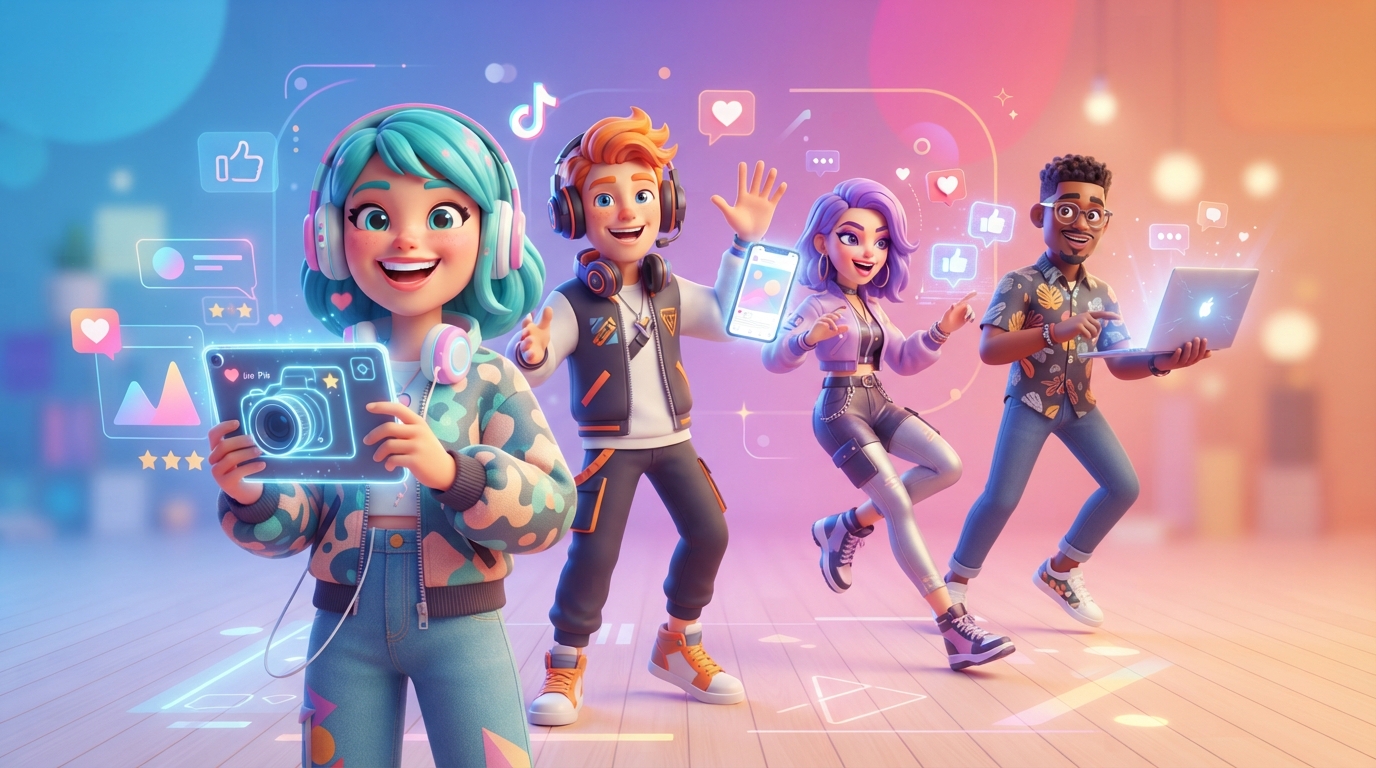
An AI influencer is a computer-generated persona that creates content, interacts with followers, and promotes products like a human creator, powered by generative AI and video synthesis.
Key takeaways
- AI influencers are consistent, 24/7 digital personas powered by LLMs and video diffusion models.
- They offer brands total creative control and eliminate the risk of creator-related PR scandals.
- Modern AI influencers are built on 'locked' character seeds to ensure visual consistency across videos.
- Cost-efficiency is a primary driver, with AI videos costing a fraction of traditional agency-led UGC production.
An AI influencer is a digital character created using generative artificial intelligence that functions as a social media personality. Unlike traditional CGI models of the past, modern AI influencers use large language models (LLMs) to define their personality and video diffusion models to generate high-fidelity, short-form content. They exist to build audiences, share stories, and promote brands without the scheduling conflicts or high overheads of human creators.
In this guide, we will break down the mechanics of virtual creators, the strategic advantages for founders, and how the technology has evolved into a cornerstone of content automation for solo founders and startups.
The Evolution: From CGI Models to Generative Personas
To understand what an AI influencer is today, we have to look at where they started. The early wave (circa 2016) featured characters like Lil Miquela. These were essentially high-end 3D renders that required a team of digital artists, months of planning, and six-figure budgets to produce a single campaign. They were ‘virtual,’ but they weren’t ‘AI’ in the way we define it now.
Today, the landscape has shifted. An AI influencer in 2026 is built on generative foundations. This means:
- Dynamic Content Generation: Instead of manual 3D modeling, tools like an AI influencer generator use text-to-video and image-to-video technology to create assets in minutes.
- Consistency Engines: Using ‘character seeds’ or LoRA (Low-Rank Adaptation) models, creators can ensure the AI persona looks exactly the same in every video, whether they are in a kitchen or an office.
- Scalability: A single brand can now manage a fleet of AI influencers across different niches without hiring a production crew for each shoot.
How AI Influencers Work: The Technical Stack
Creating a successful AI influencer requires more than just a prompt. It involves a sophisticated workflow that bridges the gap between a ‘cool image’ and a ‘believable brand ambassador.’ This is a core part of the founder’s guide to marketing on autopilot.
1. Persona and Backstory
Before the visuals are generated, the influencer needs a ‘soul.’ This is a document defining their tone of voice, values, interests, and even their flaws. If your AI influencer is for the education sector, you might follow specific frameworks for creating an AI influencer for online education.
2. Visual Identity
Using diffusion models, a base character is generated. This character is then ‘locked.’ In professional platforms like Market4Me.ai, this ensures that the AI influencer remains a consistent on-screen persona. You don’t want your influencer’s eye colour or hair texture changing between TikToks.
3. Voice Synthesis
AI influencers use text-to-speech (TTS) engines that go beyond robotic monotones. Modern voices include ‘prosody’—the natural rhythm, stress, and intonation of human speech—enabling them to deliver hooks and calls-to-action effectively.
AI Influencer vs. Human Influencer: A Comparison
Deciding between a human creator and an AI persona often comes down to control versus spontaneity. Below is a breakdown of how they compare in a professional marketing environment.
| Feature | Human Influencer | AI Influencer |
|---|---|---|
| Production Speed | Days to weeks (shipping/filming) | Minutes to hours |
| Creative Control | Limited (subject to creator’s style) | Absolute (pixel-level control) |
| Scalability | Linear (more creators = more cost) | Exponential (one persona, infinite content) |
| Availability | Subject to schedules/burnout | 24/7, 365 days a year |
| Reliability | Potential for PR scandals/delays | Zero risk; brand-safe by design |
| Cost | Variable (often includes high fees) | Predictable (e.g., credit-based models) |
The Business Case for Virtual Creators
For many brands, the shift toward AI influencers isn’t just about the ‘cool factor’; it’s about unit economics. When you use an AI UGC generator, you are bypassing the traditional bottleneck of sourcing, vetting, and managing human talent.
Predictable Costs
Traditional influencer marketing is notorious for opaque pricing. One creator might charge $500 for a Reel, while another charges $5,000 for the same reach. With AI, costs are mapped to compute. For example, on Market4Me.ai, a 15-second 720p video costs approximately 825 credits. This allows founders to forecast their monthly marketing spend with precision.
Brand-Aware Content
An AI influencer doesn’t just talk; they talk about your product. By crawling your website, platforms can ensure the influencer understands your value propositions. This makes them significantly more effective than a generic creator who might only have a surface-level understanding of your brand.
Multi-Platform Dominance
An AI influencer can be everywhere at once. You can generate a script for TikTok, a different angle for Instagram Reels, and a longer version for YouTube Shorts, all using the same persona. This is the essence of building an AI content calendar.
Ethical Considerations and Transparency
As the line between digital and physical blurs, transparency is vital. Platforms like TikTok and Instagram have introduced labels for AI-generated content.
- Disclosure: It is best practice (and often a platform requirement) to use tags like #AI or #VirtualInfluencer.
- Authenticity: While the influencer is ‘fake,’ the value they provide must be real. Whether it’s entertainment, education, or product information, the content must stand on its own merit.
- Regulation: According to the EU AI Act, transparency obligations exist for AI systems that generate or manipulate image, audio, or video content to ensure users are aware they are interacting with AI.
How to Launch Your First AI Influencer
If you are ready to move beyond the theory and start publishing, the workflow is more accessible than ever. You no longer need to be a prompt engineer or a video editor.
- Define the Niche: Choose a specific audience. Are you targeting eco-conscious parents or B2B SaaS founders?
- Select Your Persona: Use a platform to generate a consistent visual identity. Ensure the look aligns with your brand’s aesthetic.
- Feed the Strategy: Don’t guess what to post. Use a content idea generator to find hooks that are currently trending in your industry.
- Review and Iterate: Use a ‘swipe-to-approve’ workflow to maintain quality. If a script doesn’t sound right, edit it before the video is finalised.
- Automate Distribution: Connect your accounts and let the system publish on a steady cadence. Consistency is what triggers social media algorithms, not one-off viral hits.
The Future of Brand Personas
We are moving toward a world where every brand has its own ‘living’ mascot. These aren’t just static logos; they are AI influencers that can respond to comments, host live streams, and evolve alongside the product. For the solo founder, this means the ability to run a massive media operation without the massive headcount.
If you’re tired of the ‘blank page’ problem and want to start shipping daily video content that actually represents your brand, it’s time to look at an AI video marketing platform. You can start building your AI-driven presence today and see how a consistent virtual creator can transform your reach.
Put your marketing on autopilot
Paste your URL and let Market4Me.ai build, schedule and post your content for you.
Start free →Frequently asked questions
Is an AI influencer legal for advertising?
Yes, AI influencers are legal for advertising, provided you follow platform-specific disclosure rules (like TikTok's AI content label) and local consumer protection laws regarding 'clear and conspicuous' disclosure of synthetic media.
How much does it cost to create an AI influencer?
Costs vary by platform. On Market4Me.ai, you can start for $199/mo, which covers about 30 videos. This is significantly cheaper than the thousands of dollars typically required to hire a human influencer or a CGI production house.
Can AI influencers go viral?
Absolutely. Social media algorithms prioritise engagement, watch time, and shareability. If an AI influencer provides high-value or entertaining content, it has the same potential to go viral as any human creator.
Do I need technical skills to manage an AI influencer?
No. Modern platforms handle the complex diffusion and rendering processes. You simply provide your website URL, review the generated strategy and scripts, and approve the videos for publishing.
Will people follow a 'fake' person?
History shows they will. From fictional characters in movies to CGI stars like Lil Miquela, audiences connect with stories and personalities regardless of their physical existence, as long as the content is relatable or useful.