 Market4Me
How to Make UGC-Style Video Ads for Facebook (2026 Guide)
To make UGC-style video ads for Facebook, capture attention with a 3-second native hook, present a specific user problem, and demonstrate your product in a lo-fi vertical format.
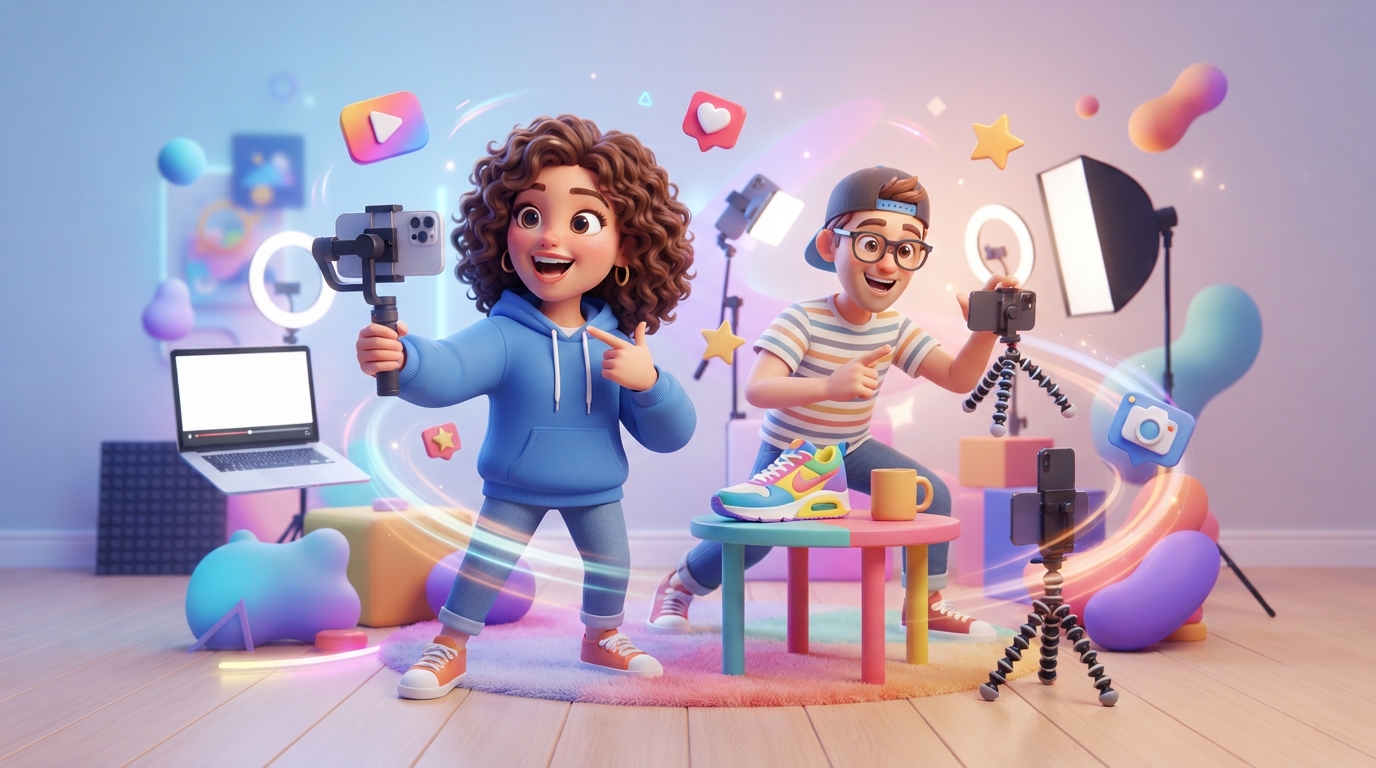
To make UGC-style video ads for Facebook, capture attention with a 3-second native hook, present a specific user problem, and demonstrate your product in a lo-fi vertical format.
Key takeaways
- The first 3 seconds (the hook) determine over 70% of your ad's overall performance; always test at least three different hook variations.
- Keep production values deliberately raw—highly polished, studio-shot commercials underperform authentic, mobile-shot aesthetic videos on Facebook.
- Automated tools and AI UGC platforms can lower your cost-per-video significantly compared to traditional agency retainers or freelance creators.
- Optimise for silent viewing by adding native, high-contrast text overlays and captions, as most mobile users watch without audio.
To make UGC-style video ads for Facebook that convert, you must capture attention within the first 3 seconds with a native-looking visual hook, present a highly specific user problem, demonstrate your product as the solution in a vertical (9:16) format, and end with a clear call-to-action. Successful ads look like organic posts from a friend, not highly produced corporate commercials.
In the current digital advertising landscape, users have developed banner blindness for traditional, polished studio commercials. Instead, they stop scrolling for content that looks native to their feeds—videos shot on mobile phones, featuring real people, with raw editing and natural lighting. This is the essence of User-Generated Content (UGC) style advertising.
Whether you are a solo founder launching your first campaign or a marketing lead scaling a mature brand, this comprehensive guide will show you exactly how to design, script, produce, and test high-converting UGC-style video ads for Facebook.
The Anatomy of a High-Converting Facebook UGC-Style Ad
A successful UGC-style ad is not a random, unscripted video. It is a highly structured sales pitch disguised as an organic social post. To successfully make ugc-style video ads, you must follow a proven psychological sequence that guides the viewer from curiosity to conversion within 15 to 30 seconds.
1. The Visual & Verbal Hook (0–3 Seconds)
Your hook has one job: stop the user from swiping past. The hook must be visually dynamic and verbally compelling. Avoid corporate logos, intro animations, or slow introductions. Start mid-action or mid-sentence.
- Visual hooks: Pouring a liquid, unboxing a package, pointing at a text bubble, or showing a dramatic before-and-after split screen.
- Verbal hooks: “Here is the honest truth about…”, “If you struggle with [problem], stop scrolling,” or “I threw away my old [product category] for this one reason.”
2. The Core Struggle or Problem (3–8 Seconds)
Once you have stopped the scroll, immediately introduce a highly relatable pain point. Do not speak in broad generalities. Use specific, sensory details. If you are selling a productivity app, do not just say “Are you busy?” Instead, say, “I used to spend three hours every Sunday night manually planning my weekly content calendar while staring at a blank screen.”
3. The Product Introduction & Demo (8–15 Seconds)
Introduce your product naturally as the logical solution to the problem just described. The transition should feel like a recommendation from a friend. Show the product in action. If it is physical, show it being held, opened, or used. If it is software, show a screen recording of the most satisfying or high-value feature. Avoid abstract animations; show the real interface.
4. Proof and Objection Handling (15–22 Seconds)
Anticipate the viewer’s immediate objection (e.g., “It looks too expensive,” “It probably doesn’t work for my industry,” or “It looks complicated”). Address this head-on with a quick bite of social proof. This could be a text overlay showing a 5-star review, a count of active users, or a quick clip demonstrating how simple the setup process is.
5. The Native Call-to-Action (22–30 Seconds)
Conclude with a clear, single directive. Do not ask them to follow your page, visit your blog, and buy your product all at once. Tell them exactly what to do next: “Click the link below to get yours,” or “Tap ‘Learn More’ to calculate your savings.” Keep the visual styled like a native social media ending, not a glossy corporate logo screen.
How to Script Your UGC Ad: The Three-Angle Framework
Before you turn on a camera or open an editing tool, you need a script. Writing a script ensures your message remains concise and focused on conversion. When you make ugc-style video ads, we recommend writing three distinct script variations based on these proven performance angles:
Angle A: The “Us vs. Them” Comparison
This angle works exceptionally well for products entering a crowded market. It visually contrasts the frustration of using traditional solutions with the ease of using your product.
- Visual: Split-screen or alternating clips. On the left: grey-toned, frustrating footage of the “old way.” On the right: bright, seamless footage of your product.
- Script Focus: Direct feature-to-feature comparison focusing on speed, cost, or simplicity.
Angle B: The Aesthetic ASMR / Unboxing
This angle prioritises sensory appeal over heavy dialogue. It is ideal for physical goods, beauty products, home decor, or highly visual software platforms. For physical products, you can find inspiration in our guide on how to make product videos for Facebook that convert (2026 guide).
- Visual: Tight, crisp, macro shots. Focus on the sounds of opening packaging, peeling off protective films, or clicking a button.
- Script Focus: Light voiceover or minimal native text bubbles highlighting premium materials, ease of setup, or immediate gratification.
Angle C: The “Founder’s Journey” / Behind-the-Scenes
People buy from people. A raw, direct-to-camera explanation from the founder explaining why they built the product builds immense trust. This approach is highly effective for early-stage startups and solo operators who need to build brand equity quickly. You can explore more about this strategy in our resource on AI UGC ads: a beginner’s guide for solo founders.
- Visual: The founder sitting in their office or warehouse, holding the product, speaking directly to the front-facing camera.
- Script Focus: “I couldn’t find a tool that did X without charging $500 a month, so I spent the last six months building it myself. Here is how it works.”
Production Guidelines: Making High-Performing “Lo-Fi” Video
To make your video ads look like authentic user-generated content, you must avoid looking over-produced. However, “lo-fi” does not mean low quality. There is a precise balance between raw authenticity and poor production that drives viewers away.
- Aspect Ratio (9:16 is Mandatory): While Facebook supports square (1:1) videos, vertical (9:16) video occupies the maximum real estate on mobile screens. According to Meta’s Business Help Center, vertical videos drive significantly higher engagement and lower cost-per-click rates in mobile-first environments.
- Lighting: Avoid professional studio three-point lighting setups that make your video look like a television commercial. Instead, stand facing a large window to utilise natural, diffused daylight. This keeps skin tones accurate and maintains an organic, everyday appearance.
- Audio Quality: This is the one area where you cannot compromise. While viewers will tolerate casual, hand-held video footage, they will immediately swipe away if the audio is echoey, muffled, or windy. Use a simple clip-on lavalier microphone or record voiceovers in a quiet, carpeted room.
- Native Style Captions: Over 75% of mobile users watch video ads on social media with the sound turned off. You must include captions. Do not use elegant, tiny, cinematic subtitles. Use high-contrast, bold, native-style text bubbles (such as yellow, green, or white text on a black background) that mimic the built-in caption tools of TikTok or Instagram Reels.
Traditional Creators vs. AI UGC Generators: Cost, Speed, and Trade-offs
Producing a steady stream of UGC-style video ads traditionally required hiring freelance creators, shipping them physical products, waiting weeks for raw footage, and negotiating complex usage rights. Today, software platforms and artificial intelligence have introduced alternative workflows.
Below is a direct comparison of the primary methods used to produce UGC-style video ads for Facebook:
| Metric | Traditional UGC Agencies | Freelance Creators (Fiverr / Upwork) | AI UGC Generators (e.g., Market4Me.ai) |
|---|---|---|---|
| Average Cost per Video | £150 – £500+ | £80 – £250 | ~£6.60 (Based on our Starter plan at $199/mo) |
| Turnaround Time | 2 to 4 weeks | 1 to 2 weeks | Under 5 minutes |
| Usage Rights | Often limited (30-90 days) | Negotiable, often extra fees | 100% owned by you permanently |
| Scalability | Hard (requires new contracts) | Medium (dependent on creator availability) | Infinite (generate variants instantly) |
| Effort Required | High (briefing, shipping, editing) | High (vetting, communication, feedback) | Low (paste website URL, review, and publish) |
For teams with limited budgets or those who need to test dozens of different creative hooks weekly to combat ad fatigue, utilizing an AI UGC generator or designing a consistent visual persona with an AI influencer generator offers a highly predictable, cost-effective alternative to traditional, manual production pipelines.
Step-by-Step: How to Make UGC-Style Video Ads
If you are ready to build your first UGC-style video campaign, follow this exact five-step execution blueprint:
Step 1: Define Your Single Core Message
Do not try to explain every single feature of your product in one video. Pick one specific feature, one target audience, and one primary benefit. For example, if you sell financial software, write one ad specifically for freelance designers focusing on tax write-offs, and a completely separate ad for small e-commerce merchants focusing on inventory tracking.
Step 2: Write Three Hook Variations
The body of your video can remain exactly the same, but you should always write and record at least three different hook variations. This allows you to test different psychological angles (e.g., pain-point focus, curiosity focus, or direct offer focus) without needing to recreate the entire video from scratch.
Step 3: Source or Generate Your Visual Assets
Gather your footage. If you are filming yourself or a creator, record in 1080p or 4K at 60fps on a standard smartphone. Keep your movements steady but natural. If you prefer a completely hands-off approach, you can use Market4Me.ai. Simply paste your website URL; the platform crawls your landing page to understand your brand, writes high-converting scripts, and automatically generates vertical video assets featuring consistent on-screen personas.
Step 4: Edit for High Pacing
UGC video ads must move quickly. Cut out every breath, pause, and “umm.” Use jump cuts to move the viewer visually from one frame to the next every 1.5 to 2.5 seconds. Add bold, colorful captions and simple sound effects (like a camera click or subtle page turn) to reinforce key words.
Step 5: Configure Your Facebook Campaign
When uploading your completed video ads to Meta Ads Manager, follow these best practices:
- Use Advantage+ Creative: Allow Meta to automatically optimize your brightness, contrast, and music overlays for different user preferences.
- Upload Hooks as Separate Creatives: Upload your three hook variations as separate ads within the same ad set to let Meta’s algorithm find the most efficient performer.
- Add a Clean Primary Text: Keep your primary ad text short (1-2 sentences) and highly focused on the offer, allowing the video to do the heavy lifting.
Testing and Optimising Your Facebook UGC Ads
Your job is not finished once your ads are live. The secret to maintaining a low Cost Per Acquisition (CPA) on Facebook is continuous, structured testing. Because creative fatigue happens rapidly on Meta’s network, you must monitor your metrics closely and iterate.
To accurately analyze your UGC ad performance, look beyond basic purchases and focus on these two diagnostic metrics:
- Hook Rate (3-Second Video Plays / Impressions): This measures how effective your first three seconds are at stopping the scroll. If your Hook Rate is below 30%, your visual or verbal hook is too slow or too corporate. You need to swap the first three seconds of the video.
- Hold Rate (15-Second Video Plays / 3-Second Video Plays): This measures how engaging the body of your video is. If your Hook Rate is high (e.g., 40%) but your Hold Rate is below 15%, viewers are stopping but immediately realizing the content is irrelevant or boring. You need to make your product demonstration faster, improve your audio quality, or make your pain-point description more relatable.
By isolating these metrics, you can make targeted edits to your video files rather than throwing away entire creative concepts that simply needed a stronger hook.
Scale Your Video Ad Production with Market4Me.ai
Consistently writing scripts, filming footage, editing vertical videos, and managing creative testing is a full-time job. For solo founders, small teams, and growing brands, maintaining a daily or weekly publishing schedule of fresh UGC-style ads can quickly become overwhelming.
Market4Me.ai was built to solve this exact bottleneck. By acting as an end-to-end autopilot for your video marketing, our AI video marketing platform handles the entire pipeline for you:
- Brand Analysis: Enter your website URL, and our system analyzes your product, target audience, and brand voice.
- Content Strategy & Scriptwriting: It generates tailored content pillars, hooks, and high-converting UGC-style scripts.
- Video Generation: It produces vertical videos (720p at 55 credits/second) featuring consistent, locked-appearance AI influencers to act as your brand’s recurring on-screen persona.
- Autonomous Scheduling: It populates a content calendar which you can review, edit, or approve in a fast, swipe-style interface before auto-publishing directly to your Facebook, Instagram, TikTok, and YouTube accounts.
If you are ready to eliminate the high costs, delays, and friction of traditional content production, try Market4Me free and start scaling your Facebook ad creative on autopilot today.
Put your marketing on autopilot
Paste your URL and let Market4Me.ai build, schedule and post your content for you.
Start free →Frequently asked questions
Why are UGC-style ads performing better than studio ads on Facebook?
UGC-style ads look like organic posts created by everyday users, which helps them blend naturally into a user's social feed. This reduces the immediate defensive reaction users have toward traditional, polished commercials, leading to higher watch times and stronger conversion rates.
Do I need to hire expensive actors to make UGC-style video ads?
No. You can film them yourself, use your existing customers' raw footage, or utilize AI video platforms like Market4Me.ai to generate realistic, consistent AI influencers to deliver your scripts without the high cost and scheduling friction of human actors.
What is the ideal length for a Facebook UGC video ad?
The sweet spot for high-converting UGC-style ads is between 15 and 30 seconds. This provides enough time to establish a hook, present a problem, demonstrate the solution, and deliver a call-to-action without losing the viewer's attention.
How often should I refresh my Facebook UGC ad creatives?
To combat creative fatigue, we recommend introducing new hook variations every 1 to 2 weeks, and entirely new video concepts every 3 to 4 weeks, depending on your daily ad spend. Higher budgets exhaust creative much faster.
Is a 9:16 vertical ratio better than a 1:1 square ratio for Facebook ads?
Yes. Vertical (9:16) video takes up the entire mobile screen in the Facebook and Instagram feeds, as well as in Reels and Stories. This maximum real estate leads to higher engagement and click-through rates compared to square formats.