 Market4Me
How to Make Product Videos for TikTok (2026 Guide)
To make product videos for TikTok, use the 'Hook-Value-CTA' framework, keep lengths between 15-34 seconds, and prioritise high-volume hook testing over high-budget production polish.
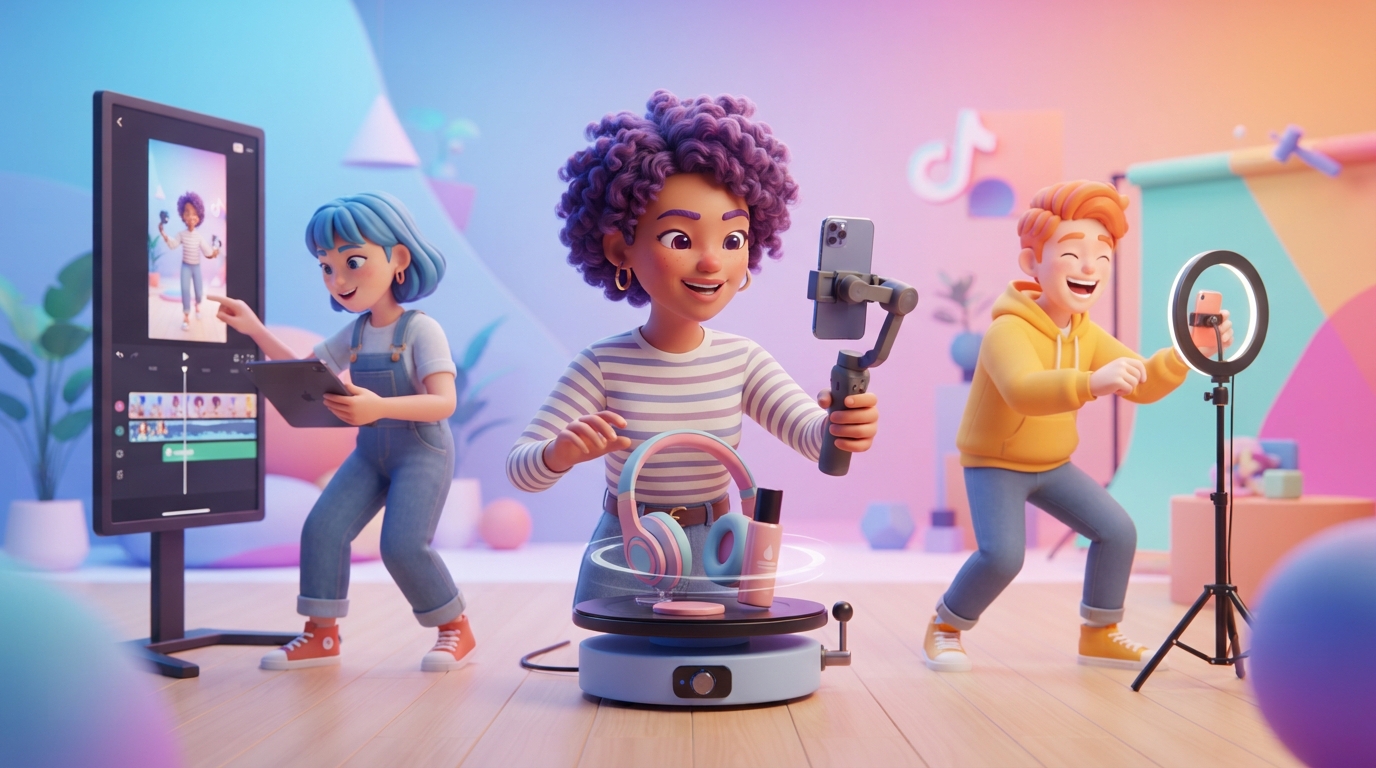
To make product videos for TikTok, use the 'Hook-Value-CTA' framework, keep lengths between 15-34 seconds, and prioritise high-volume hook testing over high-budget production polish.
Key takeaways
- The first 2 seconds (the visual hook) determine 80% of a video's success.
- Native-feeling content outperforms polished 'commercial' style videos on TikTok.
- AI influencers can solve the scaling problem by providing a consistent brand face without filming.
- High-frequency posting (1-3 times daily) is required to beat the algorithm's decay.
To effectively make product videos for TikTok in 2026, you must stop thinking like a cinematographer and start thinking like a social engineer. The platform has evolved beyond simple dance trends into a sophisticated search and discovery engine where ‘lo-fi’ authenticity is the primary currency. High-production value often signals ‘advertisement’ to a user’s brain, triggering an immediate scroll-past.
Instead, the most successful brands use a high-volume, iterative approach. They test multiple hooks for a single product to see which narrative resonates with the algorithm before doubling down on a specific creative direction.
The Three-Part Framework for TikTok Product Videos
Every successful product video follows a specific structural anatomy. If you deviate from this, your retention graph will likely drop off within the first three seconds.
1. The Hook (0-2 Seconds)
You have roughly 1.8 seconds to stop the thumb. This hook must be both visual and auditory.
- Visual Hook: Showing the product in a state of high-motion, a ‘before and after’ transition, or a person making an unusual facial expression.
- Auditory Hook: A ‘pattern interrupt’ sound or a specific opening line like “I wish I knew this before I bought…”
If you are struggling with ideas, using a free hook generator can provide a starting point based on your specific niche.
2. The Value/Problem (3-12 Seconds)
This is where you demonstrate the ‘Job to be Done.’ TikTok users do not care about your features; they care about how the product solves a specific friction point in their lives. Show the product in use. If it is software, show the UI. If it is a physical good, show the texture, the packaging, or the result of using it.
3. The Call to Action (13-20+ Seconds)
Never leave a viewer wondering what to do next. However, on TikTok, ‘soft’ CTAs often work better than ‘hard’ sells. Instead of “Buy now,” try “Check the link in bio to see if we’re still in stock” or “Let me know in the comments if you want a part 2.”
Choosing Your Production Workflow
There are three primary ways to produce content today. The right choice depends on your budget and how many videos you need to ship per week. For most brands, a hybrid approach is best.
| Feature | DIY (Smartphone) | AI Video Platform | Creative Agency |
|---|---|---|---|
| Cost per Video | £0 (Time only) | £5 - £15 | £500 - £2,000 |
| Turnaround | 2-4 Hours | 5-10 Minutes | 2-4 Weeks |
| Scalability | Low (Limited by your time) | High (Unlimited) | Medium (Limited by budget) |
| Authenticity | Very High | High (with AI Influencers) | Variable |
For those looking to scale without a full production team, an AI video marketing platform can handle the heavy lifting of scriptwriting and editing based on your website’s existing brand data.
Leveraging AI Influencers for Consistency
One of the biggest hurdles in TikTok marketing is ‘The Face.’ Brands often struggle because the founder doesn’t want to be on camera, or hiring UGC creators becomes an administrative nightmare of shipping products and chasing invoices.
In 2026, many brands are turning to recurring AI personas. By using an AI influencer generator, you can create a consistent, on-screen character that represents your brand in every video. This builds ‘parasocial’ trust with your audience—they recognise the face in their feed, which increases watch time. Unlike human creators, an AI influencer is available 24/7, never misses a deadline, and maintains a perfectly consistent appearance across hundreds of videos.
Technical Specifications for 2026
To ensure your videos aren’t penalised by the algorithm, you must adhere to these technical standards:
- Aspect Ratio: 9:16 (Vertical). Never post horizontal video with black bars.
- Resolution: 1080p is the sweet spot. 4K is often unnecessary and can lead to slower upload processing.
- Safe Zones: Keep all text and important visual elements away from the bottom 20% (where the caption/audio info sits) and the right-hand side 10% (where the interaction buttons sit).
- Captions: 80% of users watch with sound on, but on-screen captions are vital for SEO. Using a caption generator ensures your keywords are indexed by TikTok’s search engine.
The ‘Hook Swapping’ Strategy
Instead of trying to make one ‘perfect’ video, make one ‘body’ and five ‘hooks.’
- Record the middle section of your video (the product demo).
- Record five different 3-second openings (e.g., a question, a controversial statement, a silent visual demo, a listicle start).
- Export five different versions of the video.
This is the secret to how top brands schedule a month of content in a day. You aren’t reinventing the wheel every day; you are testing variations of a proven core message.
Optimising for TikTok Search (Social SEO)
TikTok is increasingly used as a search engine, particularly by Gen Z and Alpha. To make product videos that rank, you need to feed the algorithm metadata. According to TikTok’s own Business Center, using relevant keywords in both the text-to-speech and the on-screen overlays significantly improves discoverability.
- In-Video Text: Use your primary keyword (e.g., “best skincare for acne”) in the first 3 seconds.
- Speech: Say the keyword out loud. TikTok’s AI transcribes your audio to understand the video’s context.
- Captions: Use 3-5 relevant hashtags and a keyword-rich description of 150-300 characters.
How to Scale Without Burning Out
If you are a solo founder or a small team, the requirement to post 5-7 times a week is daunting. This is where an AI TikTok generator becomes a competitive advantage. By connecting your website, the AI can analyse your product’s unique value props and automatically generate scripts, visuals, and captions that align with your content strategy.
This removes the ‘blank page’ problem. Instead of spending hours editing, you spend 10 minutes reviewing and approving videos in a ‘swipe-to-approve’ interface. This shift from creator to editor-in-chief is how small brands are now out-competing larger agencies in terms of sheer output and reach.
Ready to automate your video production? Start building your AI-powered content calendar with Market4Me.ai today.
Put your marketing on autopilot
Paste your URL and let Market4Me.ai build, schedule and post your content for you.
Start free →Frequently asked questions
How long should a TikTok product video be in 2026?
The ideal length is currently between 15 and 34 seconds. While TikTok supports longer videos, shorter clips typically see higher completion rates, which is a primary ranking signal for the algorithm.
Do I need an expensive camera to make product videos?
No. In fact, high-end cinema cameras can sometimes perform worse because they look too much like traditional ads. A modern smartphone or a high-quality AI video generator is sufficient for 99% of brand content.
How many times a week should I post product videos?
Consistency is more important than frequency, but the 'sweet spot' for growth is 3 to 5 times per week. If you can manage daily posting without a drop in quality, the algorithm will generally reward the volume.
Can I use AI-generated voices for my product videos?
Yes, but they must sound natural. TikTok users are accustomed to the platform's native text-to-speech voices, so using high-quality AI clones or native-sounding AI narration is a standard and effective practice.
Is it better to use trending sounds or original audio?
A mix is best. Trending sounds help with initial discovery, but original audio (especially educational or 'explainer' style) allows you to build a unique brand identity and rank better in search results.