 Market4Me
7 Content Angles Every Ecommerce Store Owner Should Try
These seven content angles focus on specific psychological triggers and functional product benefits, helping ecommerce store owners move beyond generic updates to build a repeatable, high-converting social media operation.
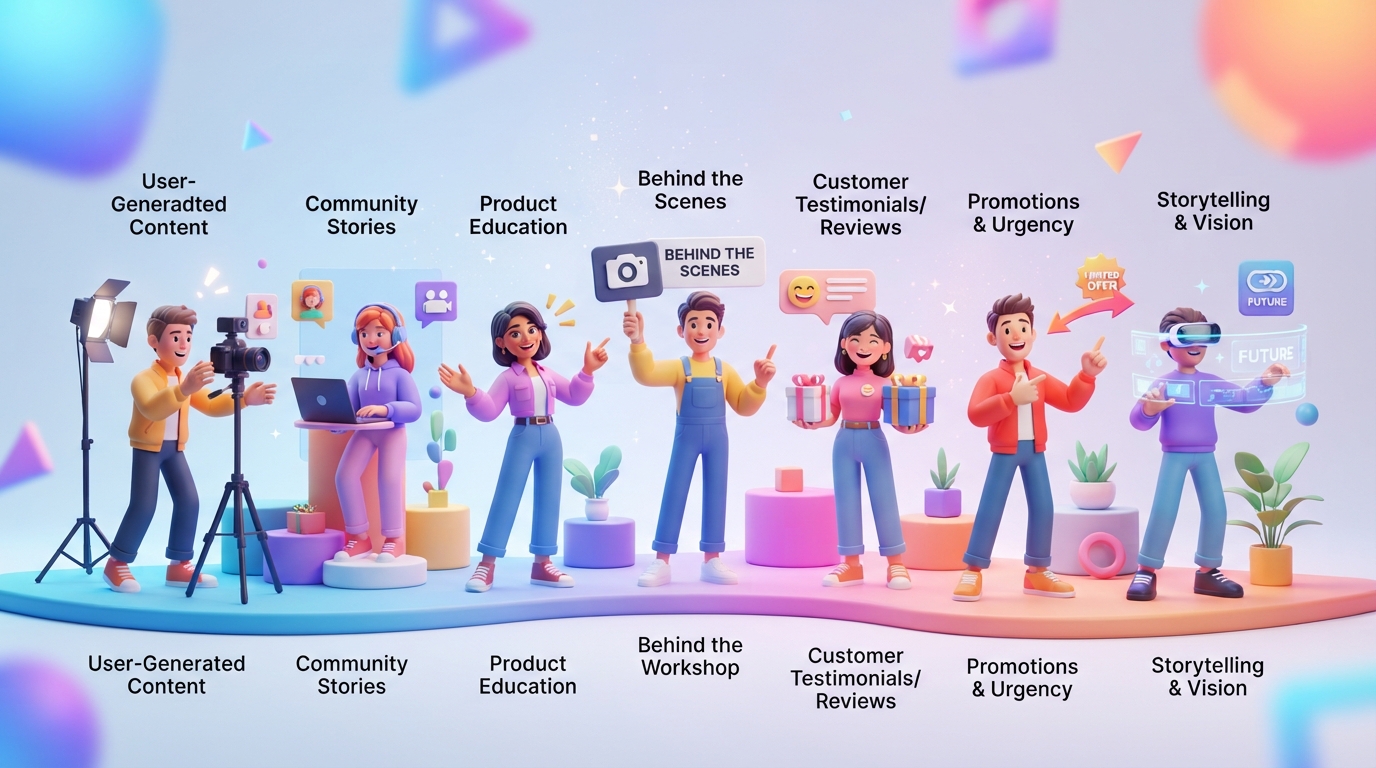
These seven content angles focus on specific psychological triggers and functional product benefits, helping ecommerce store owners move beyond generic updates to build a repeatable, high-converting social media operation.
Key takeaways
- Focus on problem-solving rather than product-pushing to build deeper trust.
- Use social proof to remove purchase friction, not just to show off.
- Systematize your content creation to ensure daily consistency without burnout.
- Every angle should map back to a specific stage in the customer journey.
Most ecommerce brands fail on social media because they treat their accounts like a digital catalog. A store is a destination, but a social feed is a conversation. To stop the scroll, you need to shift your perspective from ‘what do I want to sell?’ to ‘what does my customer actually need to see right now?’
If you are struggling to maintain a consistent output, you might find it helpful to look at how a marketing agency alternative approaches content architecture. Below are seven content angles that move the needle for ecommerce brands.
1. The ‘Problem-First’ Demonstration
Instead of showcasing a product’s features, show the specific frustration your customer faces without it. This angle works because it validates the customer’s pain point immediately.
- How to execute: Start with the ‘before’ state (the mess, the lack of time, the discomfort). Show your product in action for 3-5 seconds. End with the ‘after’ state.
- Why it works: It shifts the focus from the item to the outcome.
2. The ‘Behind-the-Scenes’ Reality
People buy from people, not faceless corporations. Showing the packing process, the sourcing, or the office chaos builds a level of trust that polished advertisements cannot replicate. For ideas on how to execute this at scale, check out our guide on 15 short-form video ideas every ecommerce store owner should try.
3. The ‘Zero-Friction’ Social Proof
Don’t just post a screenshot of a five-star review. Create a video where you respond to a specific question or objection from a review. If a customer asks ‘Does this fit a large laptop?’, film a quick 10-second clip showing it fitting perfectly.
4. The ‘Myths and Misconceptions’ Angle
Every industry has common misunderstandings. Addressing these directly positions you as a category authority. For instance, if you sell skincare, tackle the ‘more is better’ myth. If you sell tech, address common ‘battery life’ misconceptions.
Content Angle Strategy Table
| Angle | Goal | Primary Metric |
|---|---|---|
| Problem-First | Education | Saves/Shares |
| Behind-the-Scenes | Trust | Comments |
| Social Proof | Conversion | Website Clicks |
| Myths/Misconceptions | Authority | Watch Time |
5. The ‘Product Lifecycle’ Narrative
Show what happens after the sale. If you sell home goods, show how the product looks in a home after six months of use. This highlights durability and quality, which are massive purchase drivers.
6. The ‘Comparison’ Framework
Help your customers make a decision. Compare your product to the ‘old way’ of doing things, or compare two of your own products based on specific user needs. This is a core tactic when building an AI video marketing platform strategy.
7. The ‘Value-Add’ How-To
Create content that is useful even if they never buy your product. If you sell coffee equipment, teach them how to dial in their grind size. If you sell apparel, teach them how to style a specific garment. This builds long-term brand equity.
Stop Staring at a Blank Calendar
Consistency is the hardest part of ecommerce growth. If you are a solo founder, you shouldn’t be spending 20 hours a week editing. You can automate your production using our AI TikTok generator to turn your existing website content into high-performing video assets.
Before you commit to a complex strategy, make sure you have the basics down by reviewing our list of 11 proven post ideas every ecommerce store owner should try.
Ready to scale your content output? Start your trial with Market4Me.ai today and let our system handle the strategy, scripting, and scheduling while you focus on running your business.
Put your marketing on autopilot
Paste your URL and let Market4Me.ai build, schedule and post your content for you.
Start free →Frequently asked questions
How often should an ecommerce brand post?
Aim for at least one piece of high-quality content daily. Consistency is more important than massive production value, as platforms prioritize accounts that keep users engaged over time.
Do I need a professional videographer?
Not anymore. Modern social audiences prefer authentic, UGC-style content over high-budget commercials. Tools like an [AI Instagram Reel generator](/solutions/ai-instagram-reel-generator) can help you maintain a professional aesthetic without the agency costs.
What if my product is boring?
No product is boring; you are just looking at it through the lens of features instead of benefits. Focus on the transformation your product provides—if you sell soap, you aren't selling bubbles; you're selling a better start to the day.
How do I track if these angles are working?
Don't just watch follower counts. Look at website traffic, conversion rates from social, and shares. Use an [engagement rate calculator](/tools/engagement-rate-calculator) to see if your content is actually resonating with your specific audience.
Can I use AI to help with these angles?
Yes. AI can help you brainstorm hooks, write scripts, and even generate consistent personas. Using an [AI influencer generator](/solutions/ai-influencer-generator) allows you to maintain a consistent face for your brand across all your content angles.